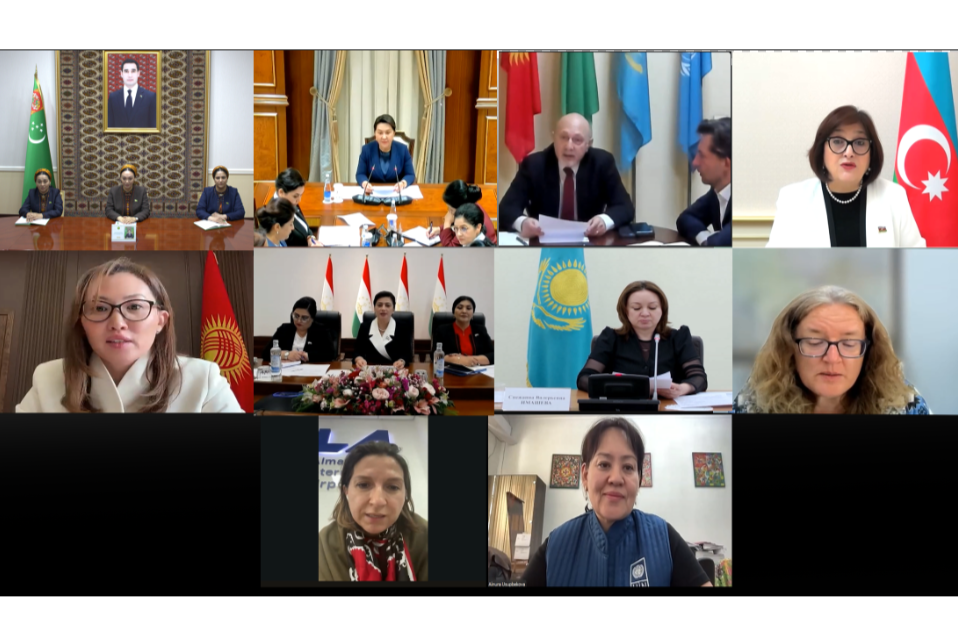
The Speaker of the Mejlis of Turkmenistan, Dunyagozel Gulmanova, participated in the first meeting of the Dialogue of Women Leaders of Central Asian States titled "Women of Central Asia: Priority Tasks and Joint Actions," held via direct video link. The meeting was organized under the leadership of the Parliament of the Republic of Uzbekistan, as reported on the official website of the Mejlis of Turkmenistan.
According to the report, the digital meeting was attended by the Head of the UN Regional Centre for Preventive Diplomacy for Central Asia, women parliamentary leaders from Central Asian states and the Republic of Azerbaijan, and the Head of the UN Women Regional Office for Central Asia.
The meeting involved an exchange of views on the organizational aspects of events planned under the Republic of Uzbekistan's chairmanship of the Dialogue of Women Leaders of Central Asian States in 2026. Discussions focused on ensuring gender equality in the region, supporting the involvement of women in public administration and the economy, and joint initiatives to achieve the Sustainable Development Goals.
In her speech, the Speaker of the Mejlis of Turkmenistan emphasized that the Women’s Dialogue has become a permanent platform for advancing cooperation among the countries of the region. It was noted that the National Action Plan for Gender Equality successfully implemented in our country is fully aligned with the Dialogue's programs. It plays a significant role in legally strengthening the position of women in state management and the national economy, improving the legislative and legal framework in this area, and bolstering international cooperation.
Dunyagozel Gulmanova particularly highlighted that comprehensive work is being carried out in Turkmenistan to protect the rights and interests of women, motherhood, and childhood, and to support families, noting that the international community highly regards these efforts.
The presentations covered the improvement of national legislative frameworks to expand socio-economic opportunities for women, ensuring access to modern technologies, establishing experience sharing among women in the region through digital technologies and online platforms, and the incentives provided for women entrepreneurs.
Participants also separately discussed the coordination of efforts between the Dialogue of Women Parliamentary Leaders of Central Asian States and prestigious international organizations, including the UN and its agencies, the European Union, and the Inter-Parliamentary Union.