In recent years, the transport and transit system of Turkmenistan has become one of the priority areas of state policy. Based on the initiatives of the National Leader of the Turkmen people and the esteemed President, large-scale transformations are being carried out in this sector: modern highways, railways, marine transport infrastructure, as well as communication and telecommunication systems are being consistently developed. These efforts not only expand the country's internal economic potential but also strengthen Turkmenistan's position in the international transport and logistics space.
Turkmenistan's favorable geographical location creates conditions for its operation as an important transit hub at the regional and continental levels. By effectively utilizing these opportunities, the country actively participates in developing transport corridors within the framework of the revived Great Silk Road. As a result, not only the national economy but also the trade, cultural, and economic relations of the entire region are gaining a new momentum of growth.
In recent years, special attention has been paid to the modernization of highways, the construction of new railway routes, and the expansion of the marine fleet's capacity. These projects contribute to the recognition of Turkmenistan as a reliable transport partner in Central Asia and across the Eurasian space. Furthermore, the development of transport infrastructure serves the fulfillment of vital tasks such as strengthening the country's economic potential, expanding foreign trade, developing cooperation with neighboring states, and ensuring regional stability.
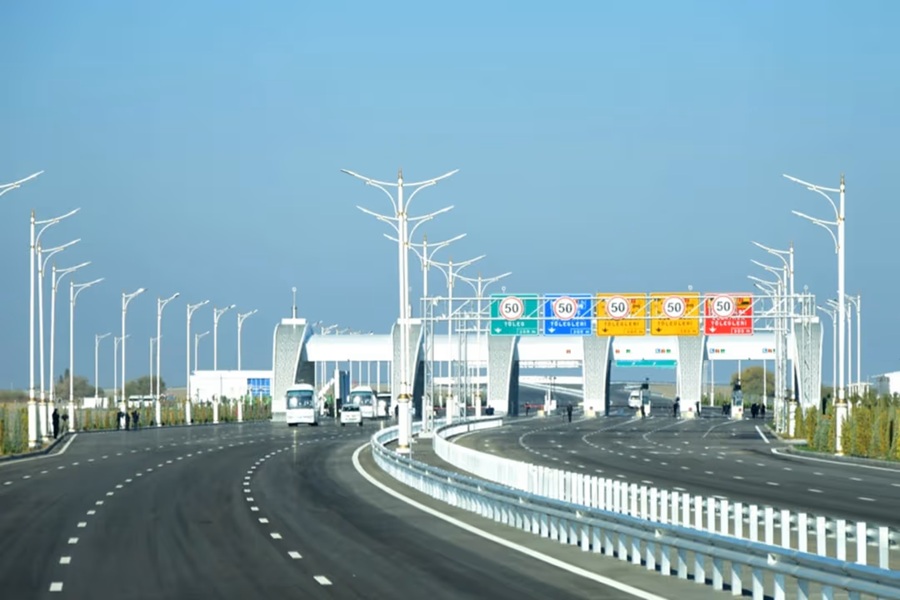
One of the largest projects implemented in this direction is the Ashgabat – Turkmenabat high-speed highway. In April of the year themed "Turkmenistan — the Land of Peace and Trust" (or specific motto year), with the commissioning of the Mary – Turkmenabat section, this internationally significant road project was fully completed. The new highway has opened up broad opportunities for improving the quality of logistics services, expanding international transit routes, increasing foreign trade turnover, and organizing more comfortable passenger transportation. In addition, the volume of international cargo transit passing through the country is increasing via this route, and new conditions are being created to enhance transport cooperation with Uzbekistan.
Bridges built across the Amu Darya River hold a special strategic significance in Turkmenistan's transport system. These structures not only ensure reliable communication between various regions of the country but also provide a powerful impetus to economic growth. One of the first such projects was the Kerki – Kerkichi railway bridge, commissioned in September 2009. Built on the basis of complex engineering solutions, this facility allowed for a multiple-fold reduction in cargo transportation costs. It also played a crucial role in developing industrial projects located on the right bank of the Amu Darya.
As a continuation of this project, the Kerki – Kerkichi highway bridge was opened in February 2013. The new transport corridor expanded the capabilities of the country's transport system and significantly eased travel for the population living on both banks of the river. It also created additional conditions for the socio-economic development of the region.
The next major project across the Amu Darya was the Turkmenabat – Farap railway and highway bridges. Due to the long-term exploitation of the old railway bridge, a decision was made to construct new, modern facilities. As a result, a new railway bridge with a length of 1,750 meters was commissioned in March 2017. Built in accordance with high technical requirements, this facility has further enhanced the reliability of international rail transport.
During the same period, the construction of a highway bridge near the new railway bridge was successfully completed. This four-lane bridge is 21.5 meters wide, and to ensure traffic safety, six-kilometer approach bypass roads were also constructed. Special sidewalks for pedestrians were also provided. These solutions enable the safe and unobstructed movement of traffic flow.
The Ashgabat – Turkmenabat high-speed highway and the bridges across the Amu Darya are not merely facilities that increase the capacity of Turkmenistan's transport system. They contribute significantly to expanding economic cooperation among the countries of the region, developing trade relations, and increasing the efficiency of international transit corridors. Such projects serve as a practical embodiment of Turkmenistan's foreign policy, which is based on the principles of peace, good-neighborliness, and mutually beneficial cooperation.
Roads bring states closer, and bridges unite peoples. Therefore, the consistent modernization of the transport and road infrastructure in our country stands as one of the essential conditions not only for economic growth but also for regional cooperation and the well-being of nations. Thanks to the wise initiatives of the National Leader and the state policy pursued by the esteemed President, the large-scale projects implemented in this direction serve to further sustainable development and strengthen the international prestige of Turkmenistan.